

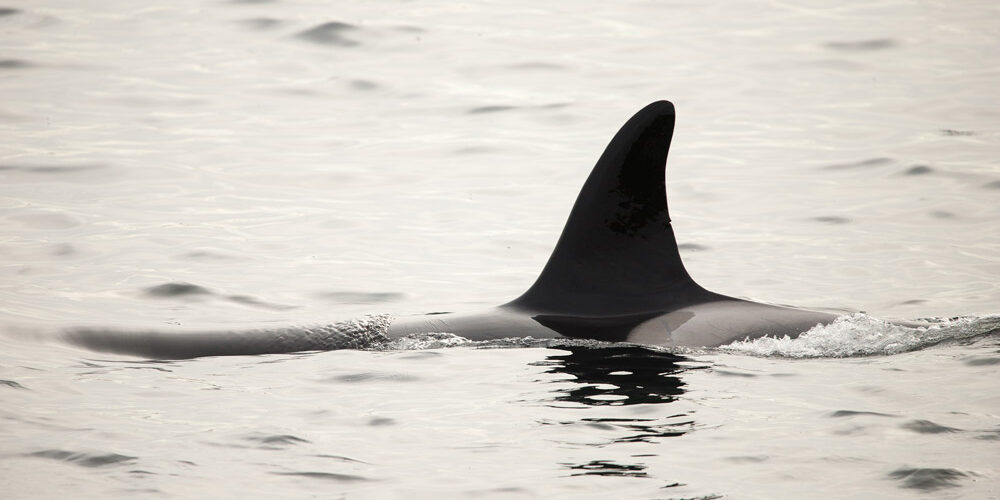
Across ancient maritime cultures, the Orca (Killer Whale) holds a deeply revered place. Because of their intelligence, group hunting strategies, and undeniable presence, they frequently represent concepts of family, community, protection, and transformation.
For one whole day, Orca came into my life. I had the opportunity and privilege to watch them, up close, armed with my camera and binoculars. It was one of the longest and deepest mindfulness experiences I have ever had and am likely to have. These amazing beings also helped me reflect on how important the notions of what they represent are so important to us humans.
The day began in the usual way on my holiday in Shetland, at a house right in the middle of a bay. I sat on the porch close to the foreshore, looking out to sea with my morning cup of coffee. We spotted a great northern diver so, being a very amateur and hobbyist photographer, I immediately went out to take a photograph of it. I swept around the bay with my zoom lens and couldn’t believe my eyes when I spotted a massive fin, 4-5 feet high in the water. I became aware of a huge surge of excitement and wonder like never before. I could feel my entire body tingling.
And so it began. Breakfast was forgotten, getting dressed was forgotten, we rushed out to the foreshore armed with cameras and binoculars. Three more fins appeared in the distance and we realised we were watching a pod of four orca. My expectation that their visit would be brief was completely wrong. Before I knew it I was lost in the deepest mindfulness experiences of my life for nine hours.
For 9 hours I thought of nothing else. I became very aware of occasional thirst, hunger, cold, discomfort in my body and eyes, but none of the usual meaningless distractions that I experience in my meditations and life. These distractions were real, meaningful messages to take care of myself with intermittent visits back into the house to grab a cup of tea and a biscuit or a warm jumper. By the end of the day I felt exhausted. My eyes were dry and aching from just looking, watching, focussing.
There is a saying ‘eyes out on stalks’. Apparently, during the 19th century, writers began using the natural phenomenon as this humorous hyperbole for human behaviour. Novelist Thomas Love Peacock in his novel Crotchet Castle used the imagery to describe a character intensely staring in disbelief, comparing the human eyes to those of a crab or snail straining outward. That was exactly my overriding experience during that day.
I realised how mindful and in the moment these beautiful, intelligent creatures were. Back and forth they went across the edge of islands in the bay. Focussed, mindful, in their community, taking care of each other, a sense of family as they fed. There they were demonstrating the traits associated with them. I became aware of the layers of feelings present in me. Wonder was now joining excitement and then relief when I realised they were fishing and not hunting the many seals in the bay.
I feel very fortunate that mindfulness has become integral to my life. It’s automatic. I am aware of how I feel all the time and the many, many layers of feelings, thoughts and emotions present at any one moment. When I am teaching mindfulness I am often asked if it is ok to not formally practice some days when the busy demands of life take over. Yes, I say, but during those times, bring mindfulness into daily life so you are fully present for each precious moment of your day and pause every now and again to notice how you feel. The 3 minute breathing space is so useful for this.
As this extraordinary day unfolded, I was filled with gratitude at having this precious, rare opportunity. But I wasn’t prepared for the overwhelming feelings, emotions and sensations in my body that I was about to experience. Towards the end of their visit the matriarch of the pod swept across the bay to where I was sitting on the foreshore. She was no more than 10 metres away from me. It took my breath away. The sheer size and presence as she blew a clearly audible spray in the air above her. The feeling was overwhelming. Mother to mother, grandmother to grandmother, species not love or essence separating us.
There are many times in my life when I realise I want to know why I feel a certain way. My observation is that this is a common human condition. Psychologists might say, at the very least, is that the drive to understand why we feel a certain way is fundamentally because we are meaning-making creatures.
Since that experience, I have been trying to make meaning of how I felt that day and how I feel every time I reflect on it. It brings tears to my eyes. I can feel a surge of energy in my heart. Its big and heavy. I am feeling it right now writing this.
Maybe I don’t need to make any sense of it, more acknowledge an opening of love and gratitude as part of my humanity and spiritual being. And total gratitude for the practice in my life that led me to feel this experience much more deeply than I would have previously.
I invite you to reflect on times in your life you have noticed something from nature, be it a bird, animal, tree, flower etc, (doesn’t have to be as big as a whale) that has touched you in some way. Look out for future moments when you can be with the experience a little deeper and become aware of what you notice. I’d love to hear your experiences.
Jacky