

Last night, an owl
in the blue dark
tossed an indeterminate number
of carefully shaped sounds into
the world, in which,
a quarter of a mile away, I happened
to be standing.
I couldn’t tell
which one it was –
the barred or the great-horned
ship of the air –
it was that distant. But, anyway,
aren’t there moments
that are better than knowing something,
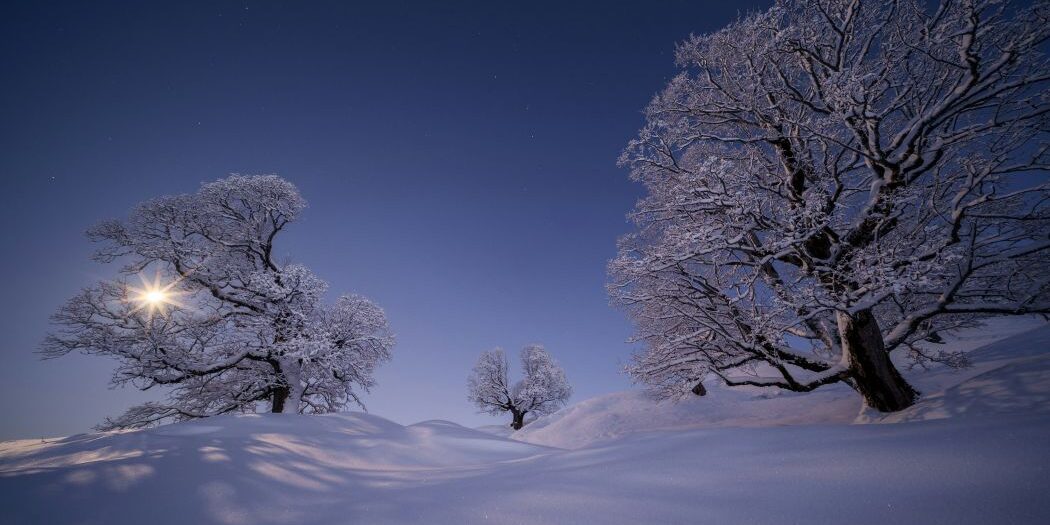
and sweeter? Snow was falling,
so much like stars
filling the dark trees
that one could easily imagine
its reason for being was nothing more
than prettiness. I suppose
if this were someone else’s story
they would have insisted on knowing
whatever is knowable – would have hurried
over the fields
to name it – the owl, I mean.
But it’s mine, this poem of the night,
and I just stood there, listening and holding out
my hands to the soft glitter
falling through the air. I love this world,
but not for its answers.
And I wish good luck to the owl,
whatever its name –
and I wish great welcome to the snow,
whatever its severe and comfortless
and beautiful meaning.
by Mary Oliver
I love the message I receive from this poem. I think Mary Oliver is saying that our minds can get so caught up in the whys and wherefores that we forget to connect to the wonders of the world even when we’re surrounded by them.
‘I love this world, but not for its answers,’ she says.
She passionately reminds us to cherish the miracle of nature, here the wintery scene and the presence of the ‘barred or great horned ship of the air’ – the owl.
The gesture of holding out our hands is her beautiful way to describe a way of being. This way of being seems to be both an outer posture and an inner one. It’s a way of embodying our love for the natural world and really being there.
I’m endlessly aghast at how we human beings can be all caught up searching for answers in the maze of thought, getting more and more lost. In this way we generate the illusion that the answers are surely here somewhere, and even more so, that the answers are the ultimate destination. Don’t get me wrong, I love meaning-making and I know that thinking is a superpower. Both capacities are extraordinary in their own ways. But, like Mary Oliver, I believe that giving up on knowing it all needs to be in our repertoire too. And in fact, it’s often only when we stop the relentless thinking that meaning finally comes rushing in.
The strange truth is that when we are able to connect with the simplicity of pure being, the questions, and their answers, no longer seem important. What a funny conundrum! And we still keep rushing about in that maze.
From inside the maze, the prospect of simply being is rather unattractive, It doesn’t promise a dopamine hit for a start. The forward motion of our ‘Drive System’ as Professor Paul Gilbert, our patron calls it, is addictive. It takes resolve, discipline and devotion to get off the wheel.
So perhaps this poem can be inspiration in this wintery season, to cherish the natural wonders that are all around us. Whether we’re in the city or the countryside, whether it’s a dreary dark day, or a crisp sparkly one. The sky above the buildings, the birds wheeling through it, the wetness of rain, the closeness of mist, the magic of frost or snow, the deep green of the evergreens, the friendliness of a robin and yes, if you’re lucky, the hooting of an owl.
Ps. Would you like to start 2026 with an inner ‘posture’ of love and wonder at the life you have and the world you live in? Our Wonder of the Everyday course gives you guidance and friendly company for just that.
Photo by Pascal Debrunner on Unsplash